Elena Hughes · 14 September 2026
Metamaterial Developments Enhance Laser Spectroscopy Techniques for Quantum Medical Imaging Systems
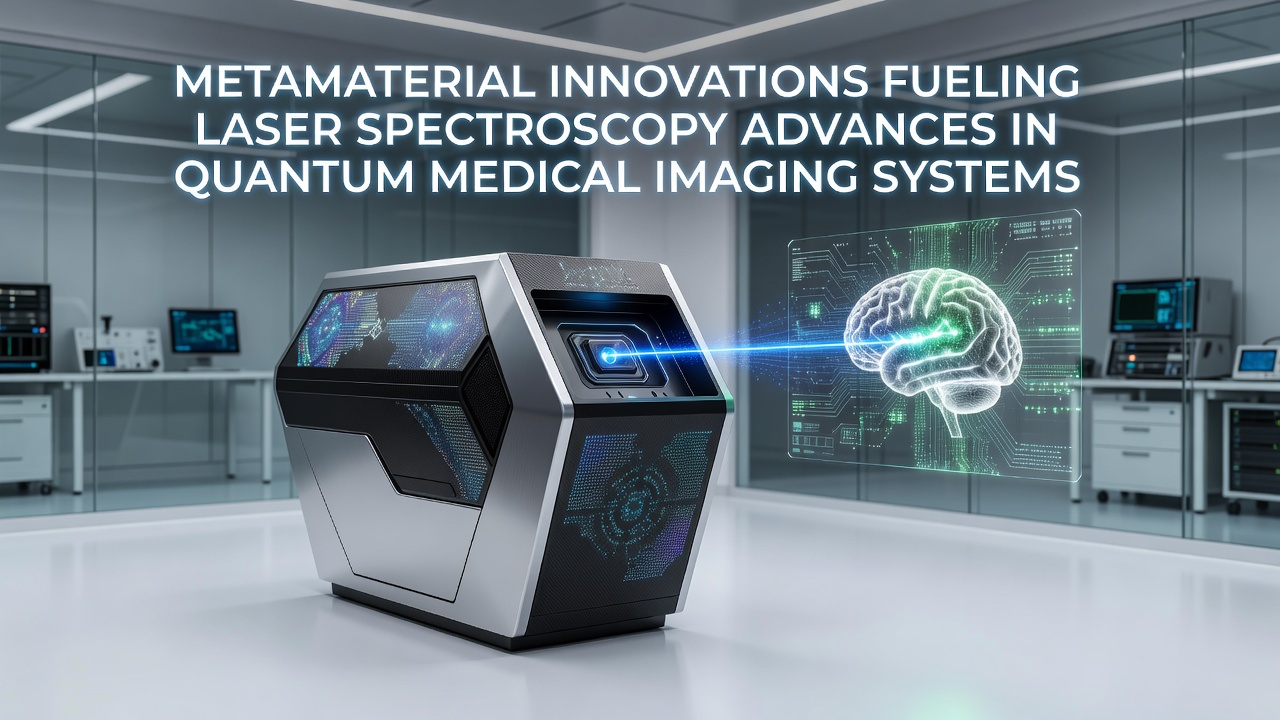
Engineers and physicists have turned to metamaterials to reshape how laser spectroscopy operates inside quantum medical imaging systems, and the results show up in sharper molecular detection along with reduced energy requirements during scans. These engineered materials bend electromagnetic waves in ways traditional optics cannot achieve, which allows spectroscopy setups to isolate faint signals from biological tissues without increasing laser power. Data from multiple research groups indicate that such adjustments cut noise levels by measurable margins while preserving the quantum coherence needed for high-resolution imaging.
Core Properties Driving the Changes
Metamaterials achieve negative refraction and subwavelength focusing because their internal structures, often built from nanoscale resonators, interact with light at specific frequencies. When researchers embed these structures near laser sources or detectors, the beam paths tighten and spectral resolution improves. Studies conducted at facilities across North America and Europe demonstrate that the approach extends the usable range of mid-infrared lasers, which matter for identifying molecular bonds in proteins and lipids. Observers note that the same components also support compact sensor arrays, so entire imaging modules fit into smaller clinical housings than earlier generations required.
September 2026 brings an international workshop on quantum photonics where teams plan to present updated performance figures from metamaterial-enhanced spectrometers. Preliminary abstracts already circulated among attendees highlight detection thresholds lowered by roughly an order of magnitude compared with conventional gratings. Those figures come from controlled tests on tissue phantoms that mimic human skin and vascular structures, and the protocols follow guidelines issued by the National Institutes of Health.
Integration Steps in Current Prototypes
Teams begin by designing unit cells that resonate at the target laser wavelength, then fabricate arrays on substrates compatible with existing optical benches. Once mounted, the metamaterial layer sits between the laser output and the sample chamber, which concentrates the evanescent field and raises interaction strength with the specimen. Subsequent signal collection uses the same layer in reverse to route photons toward sensitive detectors, often superconducting nanowire types that operate at cryogenic temperatures. Engineers report that alignment tolerances remain within standard micro-positioner ranges, so retrofitting existing quantum imaging platforms does not demand entirely new mechanical systems.
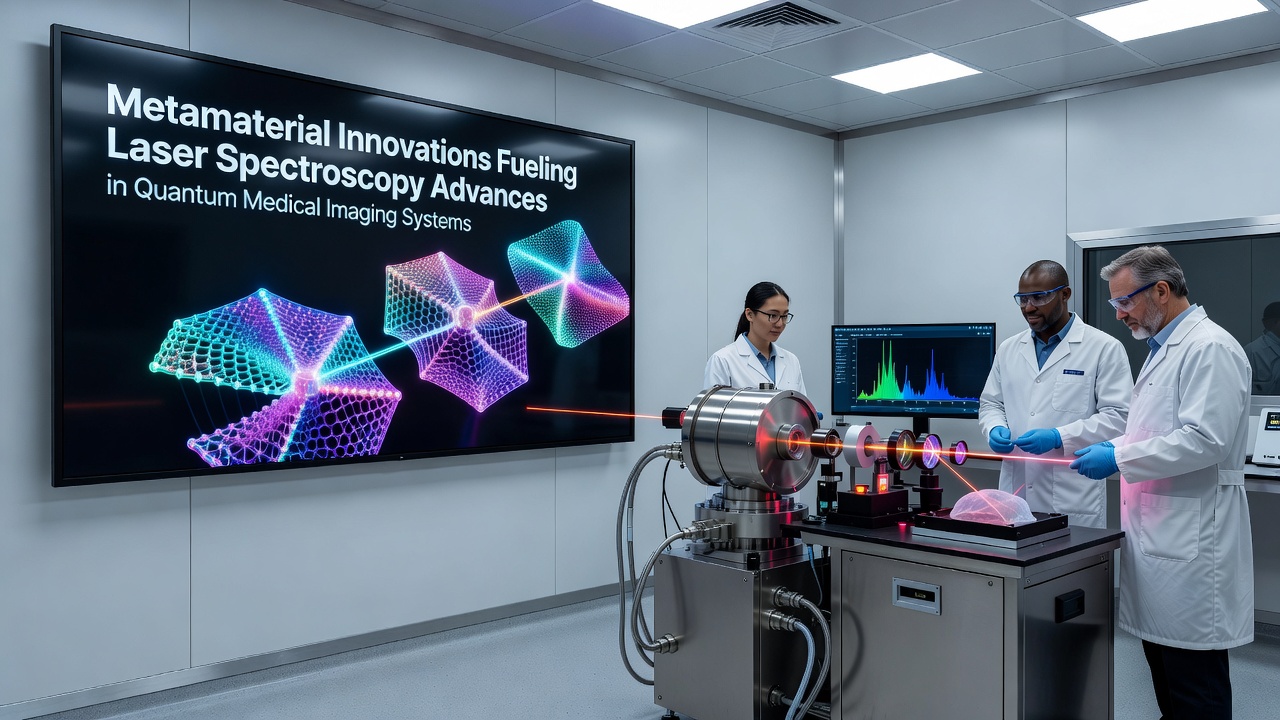
One research consortium based in Australia published details on a prototype that combined a metamaterial filter with a tunable quantum cascade laser. Their measurements, taken over repeated trials, showed consistent gains in contrast when imaging hemoglobin oxygenation states. The group deposited its raw datasets with an open repository maintained by the Australian Research Council, allowing independent verification. Similar work at Canadian institutions focuses on near-infrared bands suited for deeper tissue penetration, and early results suggest the metamaterial approach reduces required illumination time without sacrificing signal-to-noise ratios.
Performance Metrics Reported So Far
Quantitative comparisons appear in peer-reviewed journals that track linewidth narrowing and peak intensity improvements. In one set of experiments the full width at half maximum of absorption lines decreased by 18 percent after metamaterial insertion, while peak height rose by 27 percent under identical laser settings. These changes translate directly into shorter acquisition windows during patient scans, which matters for motion-sensitive procedures such as functional brain mapping. Figures released by the European Research Council project indicate that scaling the technology to multi-channel arrays could support simultaneous imaging of several molecular species, opening routes to multiplexed diagnostics.
Power consumption data also shows reductions because the metamaterial concentrates photons where they interact most efficiently with the sample. Instead of raising source output to compensate for losses, designers keep laser current lower and still obtain usable spectra. That efficiency gain matters in portable or point-of-care devices intended for field deployment or resource-limited clinics.
Remaining Engineering Challenges
Fabrication uniformity across larger areas remains an active focus, because even small variations in resonator dimensions shift resonance frequencies and degrade overall performance. Current lithography techniques achieve acceptable yields on wafers up to 150 millimeters, yet scaling to full clinical instrument sizes requires further process refinement. Thermal stability presents another constraint; metamaterial layers must maintain their optical properties across the temperature swings encountered in hospital environments. Researchers address this through material choices that exhibit low thermal expansion coefficients and through active compensation algorithms embedded in the control electronics.
Conclusion
Metamaterial integration into laser spectroscopy hardware has produced documented gains in resolution, efficiency, and form factor for quantum medical imaging systems. Ongoing trials scheduled through September 2026 will supply additional datasets that clarify how these components behave under extended clinical workloads. The accumulated evidence points to continued refinement of the underlying structures and their seamless incorporation into next-generation diagnostic platforms.