Elena Hughes · 12 October 2026
European Research Facilities Integrate Eco-Sustainable Methods with Quantum Entanglement for Medical Photonics Breakthroughs
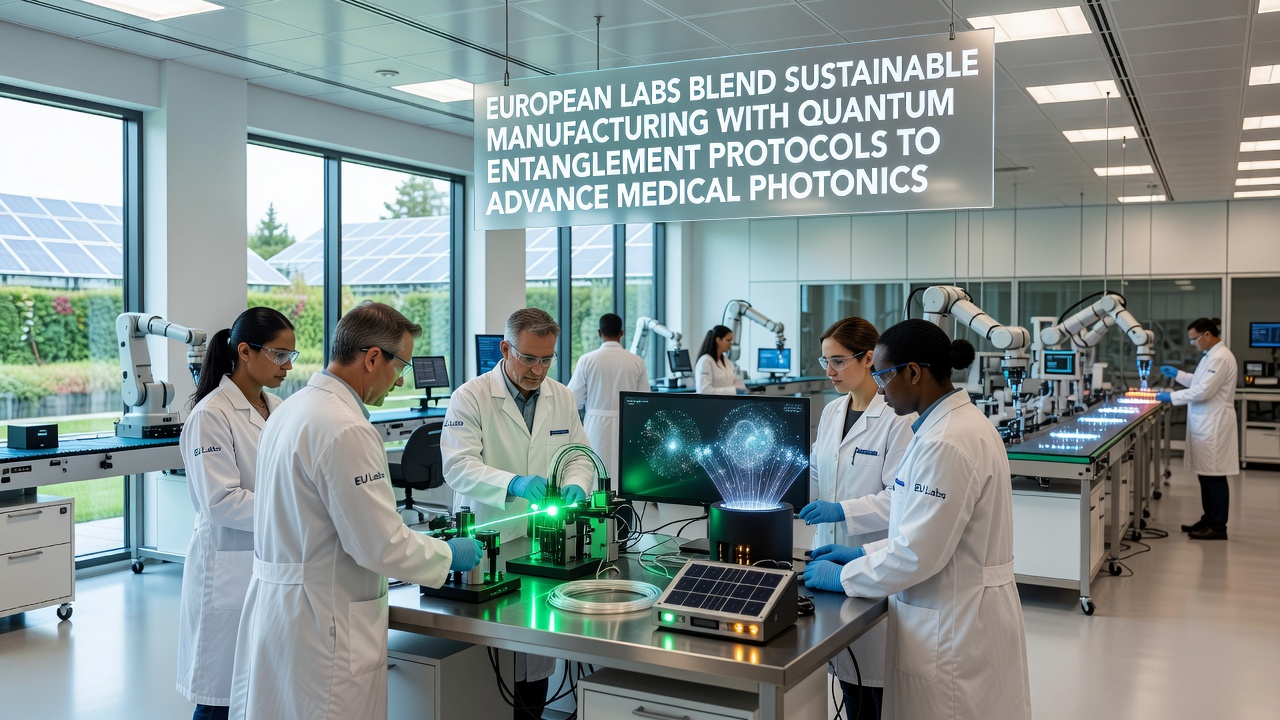
European laboratories have expanded efforts to combine sustainable manufacturing techniques with quantum entanglement protocols, and these initiatives target advances in medical photonics applications such as high-resolution imaging and diagnostic systems. Facilities across multiple countries now coordinate production processes that reduce material waste while preserving the precision required for entangled photon sources, and data from ongoing projects indicate measurable improvements in both environmental metrics and device performance.
Core Components of the Integration Approach
Researchers at several institutions apply low-energy fabrication methods to create photonic components, and these techniques rely on recycled substrates along with solvent-free deposition processes that maintain the coherence properties essential for entanglement. Teams then incorporate these components into systems where entangled photon pairs enable enhanced contrast in biological tissue imaging, and studies show that such pairings allow detection of subtle cellular changes without increasing radiation exposure levels.
Manufacturing protocols emphasize closed-loop material recovery, which means excess optical-grade glass and semiconductor wafers return to production cycles rather than entering waste streams, and this approach aligns with broader European directives on resource efficiency. Quantum entanglement testing occurs in parallel cleanroom environments designed to minimize energy consumption through optimized climate control systems, and measurements confirm that these facilities achieve entanglement fidelity rates above established thresholds while cutting operational power use by documented percentages.
Applications in Medical Photonics
Medical photonics benefits directly from these combined methods because entangled light sources support quantum-enhanced microscopy techniques that resolve structures at scales previously requiring invasive procedures. European projects demonstrate how sustainably produced detectors paired with entanglement protocols improve signal-to-noise ratios in fluorescence imaging, and clinical trials scheduled through late 2026 plan to validate these gains in hospital settings across the continent.
One program at a German-Swiss collaboration site uses bio-derived polymers for housing optical assemblies, and the materials undergo lifecycle assessments that track carbon footprints from raw sourcing to final integration. Entanglement distribution over fiber links within these assemblies permits real-time quantum key distribution for secure medical data transmission, and reports from participating hospitals note reduced latency compared with conventional encryption methods.
Timeline and Milestones Through October 2026
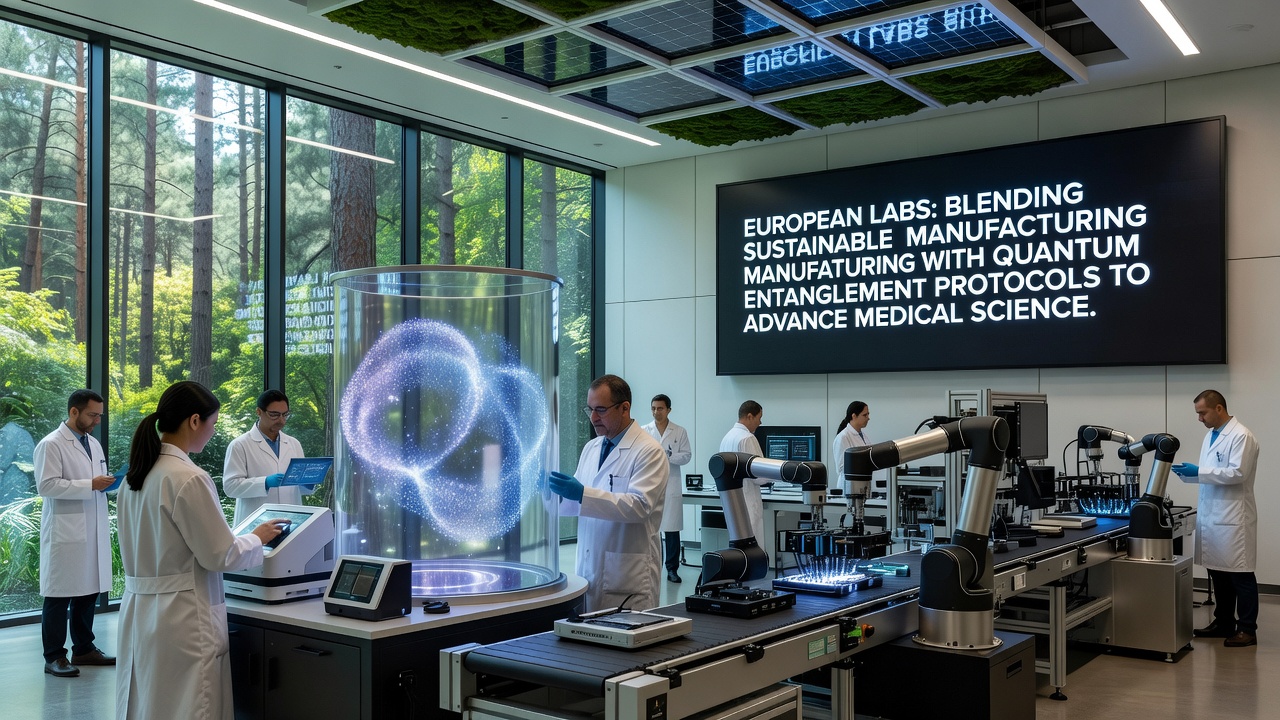
By October 2026 several consortia expect to release standardized protocols for scaling these hybrid systems, and preliminary benchmarks released in mid-2025 already outline energy savings of up to thirty percent relative to legacy manufacturing lines. National funding streams from multiple member states continue to support pilot lines that test entanglement stability under varying production conditions, and results feed into iterative design cycles that prioritize both performance and ecological compliance.
International partners contribute complementary data, including Australian research groups that supply comparative lifecycle analyses on alternative substrate materials, and these exchanges help refine European processes without duplicating efforts. A separate link to the Nature research portal provides open-access summaries of entanglement verification methods used across continents.
Challenges Addressed Through Combined Protocols
Scaling entanglement sources while adhering to sustainability targets requires careful control of impurity levels during crystal growth, and European teams employ machine-learning models trained on historical production data to predict and correct deviations in real time. Waste heat recovery systems integrated into vacuum deposition chambers further lower the overall environmental load, and operators report consistent entanglement visibility metrics despite these modifications.
Supply chain adjustments include sourcing rare-earth dopants from certified responsible mines, and traceability documentation now accompanies every batch delivered to photonics assembly plants. This documentation supports compliance audits conducted under EU regulatory frameworks, and similar verification steps appear in Canadian research guidelines referenced by European partners for cross-validation.
Conclusion
European laboratories continue to refine the intersection of sustainable manufacturing and quantum entanglement protocols, and the resulting medical photonics platforms show documented progress toward higher imaging fidelity alongside lower resource consumption. Ongoing work through 2026 focuses on standardization and clinical validation, which positions these developments for broader adoption in diagnostic and therapeutic settings.